
Why Winter Is the Best Time to Reupholster Your Furniture

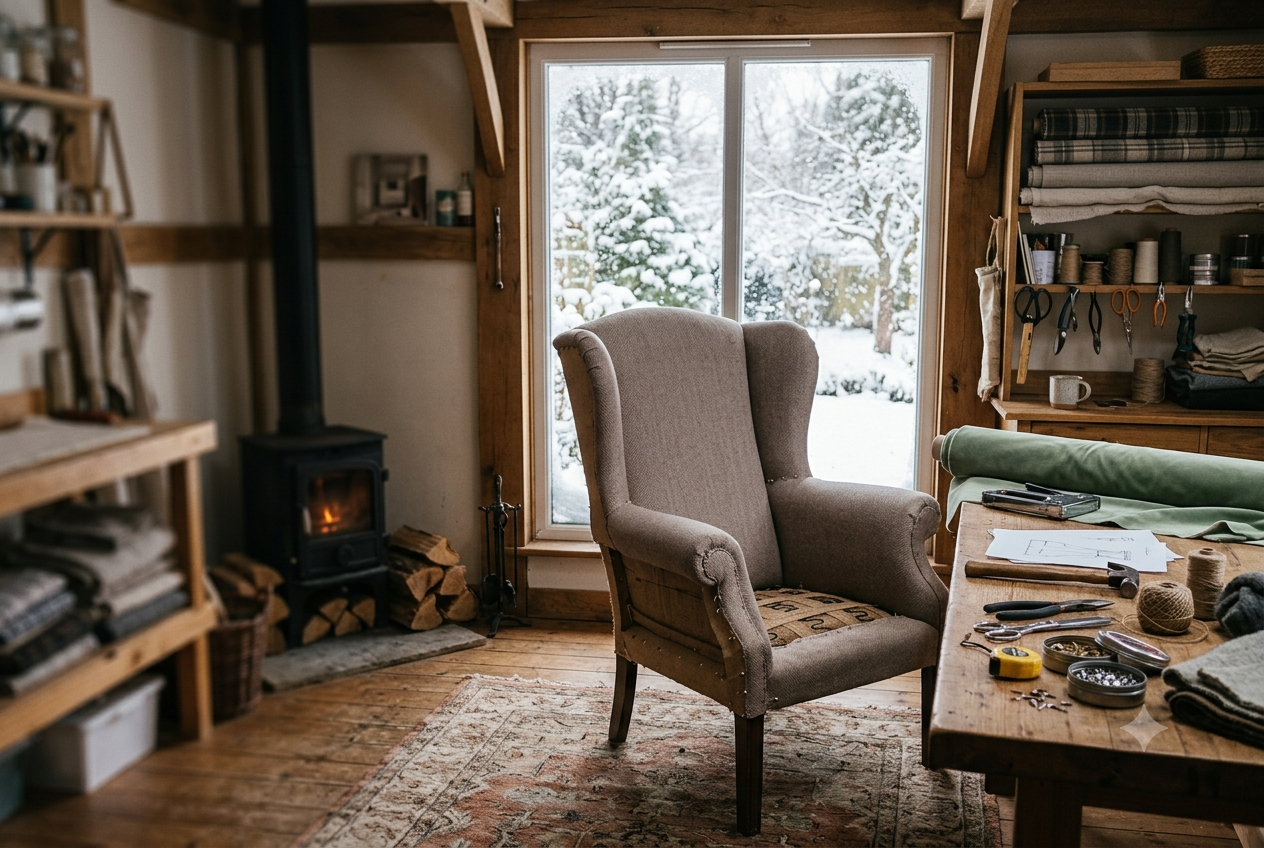
Winter in South Africa slows everything down. The braai gear goes into storage, the garden waits, and most of family life migrates indoors — onto the couch. Which is exactly why winter, not spring, is the smartest time to get your furniture reupholstered.
If you’ve been putting off dealing with that sagging armchair or the couch with the worn-through arm, here’s why the cold months work in your favour — including what it actually costs, how it compares to buying new, and what to check before you book anyone.
1. You’re Already Sitting on It More
Winter is when furniture flaws stop being ignorable. The threadbare patches, the flattened cushions, the seams that have started to give way — all of it becomes obvious once you’re spending three extra hours a day on that couch instead of outside. Reupholstering now means you get to enjoy the result through the exact season you’ll use it most, rather than finishing the job just as everyone heads back outdoors for summer.
2. Upholsterers Have More Availability
Spring and early summer are peak season for furniture refurbishment in South Africa — that’s when most people notice their furniture after months of heavy use and rush to get it fixed before entertaining season. Booking in winter means shorter turnaround times, more flexibility on scheduling, and an upholsterer who isn’t juggling a backlog of jobs. If you’re working with an in-house reupholstery team, winter bookings are simply easier to slot in.
3. It’s the Ideal Time to Reassess Fabric Choice
Cold weather has a way of making fabric choice feel real. A thin summer-weight cover that looked fine in December can feel cold and uninviting in June. Winter is when heavier, richer textures — velvets, woven upholstery weaves, and warmer tones — actually make sense, both practically and visually. It’s also low-humidity season in most of the country, which means fabric lies flatter and adhesives and finishes cure more predictably during the upholstery process itself.
4. Repairing Now Prevents Bigger Problems Later
Damaged upholstery doesn’t stay a cosmetic issue for long. Once fabric tears or seams split, moisture, dust, and general wear reach the foam and frame underneath — the parts that are far more expensive to fix than the fabric itself. Catching it in winter, before another season of heavy use, means a straightforward re-cover rather than a full rebuild involving new foam and frame repairs.
5. Your Furniture Gets a Head Start on Summer
South African summers mean visitors, entertaining, and furniture that actually gets looked at by people other than your household. Reupholstering in winter means the work is done, dry, settled, and ready well before the season your living room and lounge suite are put to the test. There’s no rush job, and no compromise on the finish because it was squeezed in before a deadline.
What Reupholstery Actually Costs
Reupholstery pricing in South Africa varies a lot depending on the piece, the condition of the frame, and the fabric you choose. As a general guide based on current market rates:
| Furniture Type | Typical Reupholstery Cost* | Notes |
|---|---|---|
| Dining chair | R400 – R900 | Per chair, depending on style and fabric |
| Armchair / occasional chair | R1,500 – R3,500 | More for leather or complex frames |
| 2-seater couch | R2,500 – R5,000 | Excludes fabric if supplying your own |
| 3-seater couch | R3,500 – R7,000 | Larger frames and cushion counts cost more |
| Sectional / corner sofa | R7,000 – R15,000+ | Size and number of sections drive the price |
*Figures are general South African market ranges for labour, gathered from multiple upholstery service providers, and exclude fabric cost. Get an exact quote for your piece before budgeting.
Fabric Cost: Budget vs Premium
Fabric is usually priced per metre and is the part you have the most control over. A 2-seater typically needs 6–8 metres; a 3-seater 8–12 metres, depending on the pattern and design.
| Fabric Tier | Price Range (per metre) | Best For |
|---|---|---|
| Budget plain / basic weave | R55 – R110 | Rentals, kids’ rooms, high-traffic budget projects |
| Mid-range Turkish weave | R110 – R200 | Everyday family lounges, good durability-to-cost ratio |
| Premium velvet / statement print | R190 – R250+ | Feature chairs, formal lounges, winter-weight comfort |
If your upholsterer is only quoting labour, the fabric cost above is what you’d add on top — so it’s worth pricing your fabric separately rather than accepting a bundled quote you can’t break down.
Reupholster or Buy New? A Quick Comparison
For pieces with a solid hardwood frame and intact joinery, reupholstering is almost always the more sensible option — both financially and environmentally. Here’s how the two stack up:
| Reupholstering | Buying New | |
|---|---|---|
| Typical cost (3-seater) | R3,500 – R7,000 + fabric | R15,000 – R35,000 for comparable quality |
| Turnaround time | 1 – 3 weeks | Immediate if in stock, longer if custom order |
| Frame quality | Keeps your existing solid frame | Unknown until years of use reveal it |
| Customisation | Full control over fabric, finish, firmness | Limited to what’s on the showroom floor |
| Environmental impact | Extends life of existing materials | New manufacturing, old piece to landfill |
| Best when | Frame is sound, piece has sentimental or design value | Frame is damaged beyond repair, or style has genuinely dated |
The exception: if the frame itself is cracked, warped, or structurally compromised, reupholstering can cost nearly as much as buying new — in that case, a straight replacement usually makes more sense.
What to Consider Before You Start
A few practical points worth thinking through before booking a reupholstery job:
- Fabric weight and durability — heavier weaves and velvets suit winter interiors and tend to handle daily use well.
- Frame and foam condition — ask your upholsterer to check underneath the old fabric, not just replace what’s visible, since hidden damage changes the price.
- Colour under indoor lighting — winter means more time indoors under artificial light, so view fabric swatches in the room and lighting where the piece will actually live.
- Get an itemised quote — separate labour, fabric, and foam costs so you can see exactly where your money is going and compare quotes fairly.
- Commercial spaces — boardrooms, waiting rooms, and reception areas benefit from the same off-peak timing before busier trading months.
Choosing the Right Fabric for Winter Reupholstery
Not all upholstery fabric performs the same way once it’s on a frame and in daily use. Here’s a quick comparison of the main options to help narrow down your choice:
| Fabric Type | Feel & Look | Durability | Good For |
|---|---|---|---|
| Velvet | Soft, warm, rich colour depth | Good — resists flattening with quality pile | Feature chairs, formal lounges, winter warmth |
| Turkish weave | Textured, tailored, plain or subtle pattern | Very good — tight weave holds up to daily use | Family lounges, high-traffic couches |
| Plain woven upholstery | Simple, versatile, neutral tones | Good, budget-friendly | Rentals, kids’ spaces, secondary furniture |
| Fire-proof rated fabric | Varies by design | Good, meets safety-rated use cases | Commercial spaces, offices, hospitality |
Start With the Right Fabric
Whether you’re restoring a favourite armchair or refreshing a full lounge suite, the fabric you choose determines both how the piece looks and how long it lasts. We stock a wide range of upholstery fabric — from velvets and Turkish weaves to plain, durable options suited to daily family use or high-traffic commercial furniture.
Browse our full upholstery fabric range to find the right material for your winter reupholstery project.